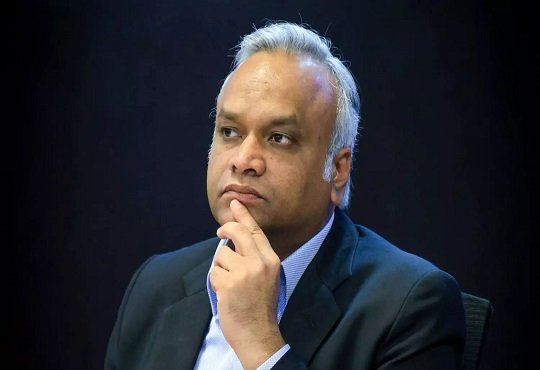
- On the use of generative AI in legal education, Justice Surya Kant said students must be made aware of which applications of the technology are permitted and which require disclosure. He urged developing a set of model guidelines on disclosing AI assistance in legal research.
Chief Justice of India Surya Kant has called for changes in legal education to make law students more accountable for their research and better prepared for legal practice, including mandatory legal aid work as a condition for graduation and additional academic credits for students who volunteer beyond the prescribed requirement. He has also urged the development of common guidelines for disclosing the use of artificial intelligence (AI) in legal research, saying law schools must teach students to use such tools responsibly rather than impose a blanket ban.
Speaking at the inaugural session of the Commonwealth Legal Education Association (CLEA) 1st Annual International Conference on Legal Education 2026 at Hyderabad, he addressed the changing role of technology in legal research, the need to strengthen clinical legal education and the importance of linking classroom learning with practical experience.
AI use in legal research: what law schools need to change On the use of generative AI in legal education, the Chief Justice said students must be made aware of which applications of the technology are permitted and which require disclosure. He urged CLEA to develop model guidelines on disclosing AI assistance in legal research, which law schools and journals across Commonwealth countries could adapt.
He said AI tools can help students and researchers locate and organise legal material, summarise judgments and develop arguments. However, their outputs are not necessarily accurate. A fabricated legal authority, for instance, can appear credible, making it necessary for researchers to verify every reference against its primary source.
“The question, therefore, is no longer whether students will use these tools, but whether the work they submit still reflects their own reasoning, understanding, and appreciation for the law,” he said.
He argued against both uncritical adoption of AI and a blanket prohibition on its use. A ban would only push students towards using the tools without guidance or disclosure. Instead, law schools should establish clear rules and teach students how to use AI as an aid to research while retaining responsibility for the work they submit.
He also cautioned against relying solely on AI-detection software to establish academic misconduct. Citing a 2023 study, he said seven widely used detectors, while performing almost flawlessly on essays written by schoolchildren in the US, incorrectly identified more than three in every five essays written by non-native English speakers as AI-generated.
This could particularly affect students across the Commonwealth, many of whom use English as a second or third language. An allegation of misconduct, he said, should not be based on the verdict of a machine alone.
He suggested that law schools reconsider assessment methods by requiring students to orally explain their written submissions, defend the legal authorities they have cited or identify errors in AI-generated answers. This, he said, would help establish whether the submitted work reflects a student’s actual understanding.
Legal aid work and practical training in law courses The CJI also called for legal aid work to become a compulsory part of legal education. He suggested that every law student should complete a minimum period of legal aid service to qualify for graduation, with additional academic credits for those who undertake work beyond the prescribed requirement.
He said legal aid clinics should not remain limited to classroom exercises or operate only during the academic semester. Students should also be encouraged to work with panel lawyers and para-legal volunteers through legal services authorities, including in villages and settlements. Those who continue their work during academic breaks should receive certificates recognising the work they have completed.
He further suggested that legal aid clinics could function as continuing learning centres, with panel advocates, legal services officers and students holding regular discussions on cases.
The integration of practical training into core law subjects also needs greater attention, he said. Rather than confining clinical learning to a separate part of the curriculum, law schools should consider incorporating practical exercises into subjects such as Evidence, Criminal Procedure, Family Law and Constitutional Law.
On legal research and the use of case law across Commonwealth countries, he also addressed the need for a common citation format. Referring to the conference’s technical session on ‘Uniform Citation for the Commonwealth’, he said neutral citations assigned by courts should serve as the primary identifiers of judgments.
The Supreme Court has adopted neutral citations since 2023. A common minimum format containing the year, court, decision number and paragraph reference could make judgments easier to trace and verify across jurisdictions, he said.